

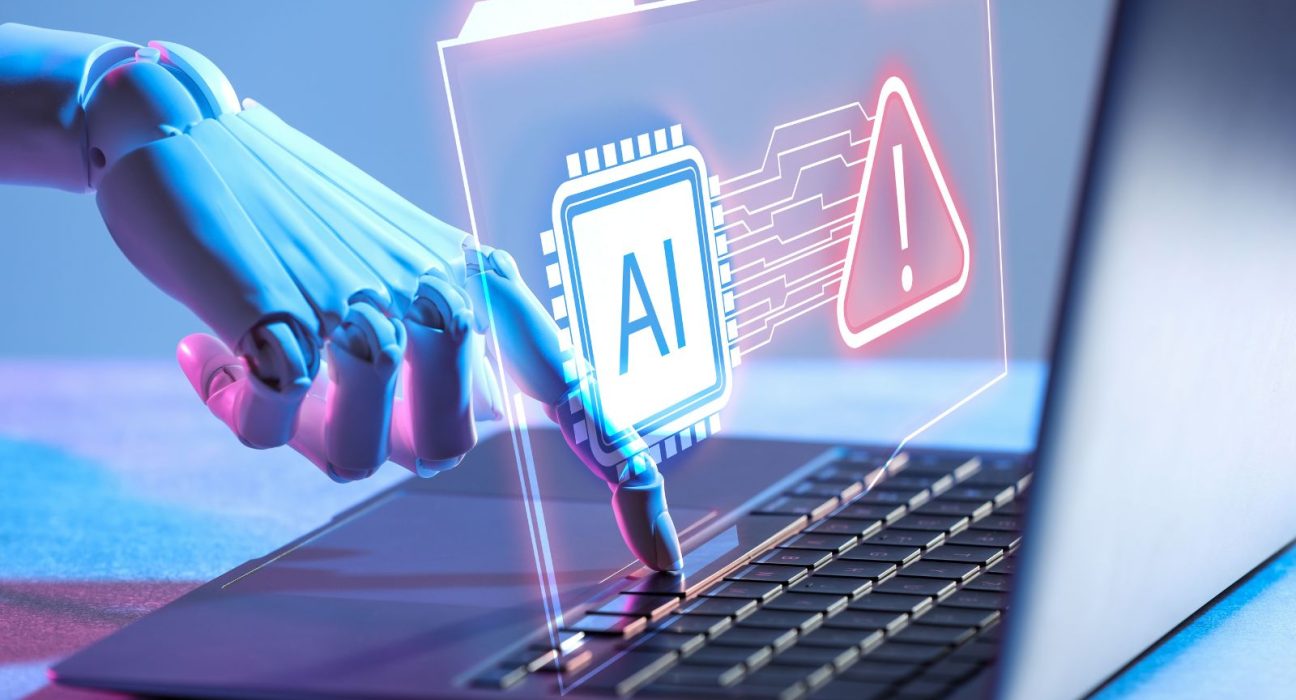
Artificial intelligence is helping businesses work faster, make better decisions, and deliver better customer experiences. From automating daily tasks to analyzing large amounts of data, AI is becoming an important part of business growth. However, as more companies depend on AI, they also face new cyber threats. Without the right protection, AI systems can be targeted by hackers, leading to data breaches, financial losses, and damaged customer trust.
That is why every business needs a strong Cybersecurity Strategy for AI from the very beginning. Security should never be added after an AI project is complete. It should be part of every stage, from planning and development to testing and deployment. Building secure AI systems from day one helps protect sensitive information, reduce business risks, and create AI solutions that people can trust.
What Is a Cybersecurity Strategy for AI?
A Cybersecurity Strategy for AI is a structured plan that protects artificial intelligence systems, the data they use, and the infrastructure that supports them. It combines traditional cybersecurity practices with security measures designed specifically for AI technologies.
Unlike regular software, AI systems continuously learn from data and make decisions based on patterns. This creates unique risks that require a specialized AI security strategy.
A complete strategy focuses on protecting:
- AI models
- Training datasets
- Business data
- APIs
- Cloud infrastructure
- User information
- Automated decision making processes
When organizations include security from the start, they reduce vulnerabilities before attackers have a chance to exploit them.
Why AI Security Matters More Than Ever
Businesses are investing heavily in AI. From healthcare and finance to retail and manufacturing, organizations rely on AI for critical operations.
Unfortunately, cybercriminals are also learning how to target AI systems.
Some common threats include:
- Data poisoning attacks
- Model theft
- Prompt injection attacks
- Adversarial attacks
- API abuse
- Unauthorized access
- Sensitive data leakage
A weak AI security framework can lead to financial loss, legal issues, damaged reputation, and loss of customer trust.
Creating a strong Cybersecurity Strategy for AI protects both your technology investment and your business.
Common Security Risks Facing AI Systems
Understanding the risks is the first step toward building stronger security.
Data Poisoning
AI models learn from large amounts of data. If attackers inject false or manipulated information into training data, the AI may produce inaccurate or harmful results.
For example, an AI fraud detection system could fail to identify fraudulent transactions because its training data was intentionally altered.
Model Theft
Developing AI models often requires significant time and investment. Hackers may attempt to steal trained models through unauthorized access or API exploitation.
This can expose valuable intellectual property and reduce competitive advantage.
Prompt Injection
Many businesses now use generative AI tools. Attackers may use carefully designed prompts to manipulate AI into revealing confidential information or ignoring safety rules.
Prompt injection has become one of the fastest growing concerns in AI cybersecurity.
Adversarial Attacks
Small changes to images, text, or other inputs can confuse AI systems.
For example, an autonomous vehicle may misread road signs because attackers altered the image in ways that humans cannot easily detect.
Data Privacy Risks
AI systems often process customer records, financial information, healthcare data, and other sensitive information.
Without strong security controls, businesses risk violating privacy regulations and exposing confidential data.
Why Security Must Begin on Day One
Many organizations focus first on building AI capabilities and think about security later.
This approach creates unnecessary risks.
Adding security after deployment is often more expensive and less effective than designing secure systems from the beginning.
A proactive Cybersecurity Strategy for AI provides several benefits.
Better Protection
Security controls are built into every development stage.
Lower Costs
Fixing vulnerabilities early costs far less than responding to a major cyber attack.
Regulatory Compliance
Businesses can better meet privacy and security requirements.
Customer Trust
People are more likely to use AI systems that protect their personal information.
Long Term Scalability
Secure AI systems can grow without introducing unnecessary security gaps.
Key Components of an AI Security Strategy

A successful AI security strategy includes multiple layers of protection.
Secure Data Collection
The quality and security of training data directly affect AI performance.
Organizations should:
- Verify data sources
- Remove sensitive information where possible
- Encrypt stored data
- Control who can access datasets
- Monitor for suspicious changes
Protecting data is the foundation of effective AI risk management.
Identity and Access Management
Not every employee should have full access to AI systems.
Organizations should implement:
- Multi factor authentication
- Role based permissions
- Least privilege access
- Strong password policies
- Continuous monitoring
These controls reduce insider threats and unauthorized access.
Secure Model Development
Developers should integrate security throughout the AI development lifecycle.
Best practices include:
- Code reviews
- Security testing
- Vulnerability scanning
- Secure APIs
- Regular model validation
Following these AI security best practices helps reduce future risks.
AI Risk Management Is Essential
Every AI project introduces new types of business risk.
An effective AI risk management framework helps organizations identify, evaluate, and reduce those risks before they become major problems.
Important risk management activities include:
Risk Assessment
Identify possible threats before development begins.
Ask questions such as:
- What data will AI process?
- Who can access the system?
- What happens if the model fails?
- Could attackers manipulate outputs?
Continuous Monitoring
Security is never finished.
Organizations should monitor:
- User activity
- AI performance
- Model accuracy
- Access logs
- API traffic
- Network behavior
Continuous monitoring allows security teams to detect suspicious activity early.
Incident Response Planning
Every organization should prepare for potential AI security incidents.
A response plan should include:
- Threat detection
- Containment procedures
- Recovery plans
- Communication strategy
- Root cause analysis
Being prepared reduces downtime and minimizes business impact.
Enterprise AI Security Requires a Bigger Strategy
Large organizations face more complex security challenges because they often manage multiple AI applications across different departments.
Enterprise AI security focuses on protecting AI systems at scale while maintaining compliance, governance, and operational efficiency.
Large businesses should establish:
- AI governance policies
- Organization wide security standards
- Secure cloud infrastructure
- Centralized monitoring
- Vendor security assessments
- Regular security audits
Strong governance ensures every AI project follows consistent security practices.
AI Security Best Practices Every Business Should Follow
Creating a secure AI system requires more than installing security software. Organizations need a long term approach that protects AI throughout its entire lifecycle. Following proven AI security best practices helps reduce cyber risks and improve the reliability of AI solutions.
Protect Sensitive Data
AI systems rely on large amounts of data to learn and make decisions. If this data is exposed or stolen, it can lead to financial loss and damage customer trust.
Businesses should:
- Encrypt sensitive data during storage and transfer.
- Remove unnecessary personal information before training AI models.
- Back up important datasets regularly.
- Restrict access to authorized users only.
- Monitor data for unusual changes.
Strong data protection is one of the most important parts of any Cybersecurity Strategy for AI.
Secure APIs
Many AI applications communicate through APIs. If these APIs are not properly secured, attackers may gain unauthorized access to AI services.
Organizations should:
- Require authentication for every API request.
- Limit the number of requests to prevent abuse.
- Monitor API traffic for suspicious behavior.
- Regularly update API security settings.
- Disable unused endpoints.
Secure APIs reduce the chances of attackers exploiting AI applications.
Keep AI Systems Updated
Cyber threats continue to evolve. Software updates often include important security fixes that protect AI platforms from newly discovered vulnerabilities.
Businesses should:
- Install security patches promptly.
- Update AI frameworks regularly.
- Replace unsupported software.
- Review third party tools before deployment.
Regular maintenance keeps AI systems secure over time.
Test AI Models Frequently
AI models should be tested just like traditional software.
Security testing helps identify weaknesses before attackers do.
Testing should include:
- Vulnerability assessments
- Penetration testing
- Model validation
- Bias testing
- Performance monitoring
Routine testing improves both security and accuracy.
Train Employees
Technology alone cannot stop cyber attacks.
Employees who use AI should understand basic cybersecurity practices, including:
- Recognizing phishing emails
- Protecting passwords
- Handling sensitive information
- Reporting suspicious activity
- Using AI responsibly
A well trained workforce strengthens every AI security strategy.
Building Security Into Every Stage of AI Development
Security should be included throughout the AI lifecycle rather than added at the end.
Planning
Before development begins:
- Define security goals.
- Identify sensitive data.
- Perform risk assessments.
- Review compliance requirements.
Development
During development:
- Follow secure coding practices.
- Protect training datasets.
- Limit developer access.
- Document security controls.
Testing
Before deployment:
- Scan for vulnerabilities.
- Test against cyber attacks.
- Validate model performance.
- Verify access controls.
Deployment
After launch:
- Monitor system activity.
- Review logs regularly.
- Apply software updates.
- Respond quickly to security alerts.
This security first approach creates stronger and more reliable AI systems.
The Role of AI in Modern Cybersecurity

AI is not only something that needs protection. It also helps businesses improve cybersecurity.
Many organizations now use AI to:
- Detects cyber threats faster.
- Monitor network traffic.
- Identify unusual user behavior.
- Automate threat detection.
- Reduce response times.
- Improve fraud detection.
When used responsibly, AI becomes a valuable tool for strengthening cybersecurity while also requiring its own protection.
Compliance and Governance Matter
Many industries must follow strict regulations for handling customer and business data. AI systems should support these requirements from the beginning.
A good Cybersecurity Strategy for AI includes:
- Clear security policies.
- Regular compliance reviews.
- Data protection standards.
- Vendor risk assessments.
- Security documentation.
- Continuous auditing.
Good governance helps organizations reduce legal risks while building trust with customers.
Future Trends in AI Cybersecurity
As AI becomes more advanced, cybersecurity will continue to evolve. Businesses that stay prepared will be better positioned to protect their systems and maintain customer confidence.
Some important trends include:
Zero Trust Security
Organizations are moving toward Zero Trust models where every user and device must be verified before accessing AI resources.
Automated Threat Detection
AI powered security platforms can detect suspicious activity in real time and respond faster than manual processes.
Secure AI Development
Security is becoming a standard requirement during AI development rather than an optional feature.
Better AI Governance
Businesses are creating stronger policies to ensure AI systems remain secure, ethical, and compliant with regulations.
Smarter Risk Management
Organizations are investing more in AI risk management to identify vulnerabilities before they become security incidents.
Common Mistakes Businesses Should Avoid
Even organizations with advanced AI projects can make security mistakes.
Avoid these common problems:
- Treating security as an afterthought.
- Giving employees unnecessary access.
- Ignoring software updates.
- Using poor quality training data.
- Skipping security testing.
- Failing to monitor AI systems after deployment.
- Not preparing an incident response plan.
Avoiding these mistakes makes your Enterprise AI security strategy much stronger.
Conclusion
Artificial intelligence is creating exciting opportunities for businesses, but it also brings new security risks that cannot be ignored. Building secure AI systems from the beginning helps protect valuable data, reduce threats, and earn customer trust. Businesses that make security a priority are better prepared to grow with confidence and adapt to future challenges.
A well planned Cybersecurity Strategy for AI helps organizations protect sensitive data, reduce cyber risks, improve compliance, and strengthen customer confidence. By combining strong security practices, continuous monitoring, effective AI risk management, and a proactive AI security strategy, businesses can safely unlock the full value of artificial intelligence. Investing in AI cybersecurity will help your business stay protected, competitive, and ready for the future.
Why Choose IT Advice?
Building secure AI solutions requires more than advanced technology. It requires the right strategy, experienced professionals, and a strong focus on cybersecurity from the start. At IT Advice, we help businesses adopt AI with confidence by providing expert guidance on AI implementation, cybersecurity, cloud solutions, and digital transformation.
Whether you are planning your first AI project or improving an existing system, our team is ready to help you create secure, scalable, and future ready solutions. Contact us today to discover how IT Advice can help your business build AI systems that are both innovative and secure.
FAQ’s
1. Why is AI needed in cybersecurity?
AI helps cybersecurity teams detect threats faster, analyze large amounts of security data, identify unusual behavior, and automate responses to cyber attacks. This improves protection while reducing response times.
2. What is the AI strategy in cyber security?
An AI strategy in cybersecurity focuses on using artificial intelligence to strengthen threat detection, automate security tasks, improve incident response, and support better decision making while keeping AI systems secure.
3. What are the 7 types of cyber security?
The seven common types of cybersecurity include:
- Network security
- Application security
- Cloud security
- Information security
- Endpoint security
- Identity and access management
- Operational security
4. What is a Cybersecurity Strategy for AI?
A Cybersecurity Strategy for AI is a framework that protects AI models, training data, infrastructure, and users through secure development, continuous monitoring, access controls, and risk management.
5. How can businesses reduce AI security risks?
Businesses can reduce risks by following AI security best practices, encrypting sensitive data, controlling user access, testing AI models regularly, monitoring systems continuously, and training employees on cybersecurity awareness.
6. Why is Enterprise AI security important?
Enterprise AI security protects large scale AI deployments across multiple departments. It helps organizations maintain compliance, safeguard sensitive information, reduce cyber threats, and ensure consistent security governance across all AI projects.